
WHAT YOU NEED TO KNOW
Planning a low-waste relocation cuts moving expenses while preventing hundreds of pounds of trash from entering local landfills. Applying simple eco friendly moving tips allows you to streamline packing and lower transportation emissions without adding extra stress to your move.
- 900 million cardboard boxes and 8.4 million tons of household junk are discarded during U.S. relocations every year.
- Opting for reusable moving boxes hire services eliminates tape purchases and saves up to $150 compared to buying new single-use cardboard.
- Switching to zero waste packing materials like household linens and towels cuts supply costs by 30% to 50%.
Total cost savings depend on move distance and whether you source used cardboard locally or rent rigid plastic crates.
How Can You Plan Ahead for a Low-Waste Move?
Audit Belongings to Bring Only What You Need
Auditing your possessions before packing cuts fuel consumption and lowers truck size requirements. According to data from the Environmental Protection Agency (EPA), the average American generates over 4.5 pounds of waste daily, a figure that spikes dramatically during household moves.
- Categorize by utility: Group items into immediate essentials, seasonal items, and unneeded duplicates.
- Weigh disposal costs: Transporting unused furniture costs roughly $0.50 to $0.75 per pound in freight or truck fuel fees.
- Set a clear threshold: Discard or rehome anything you have not used in the past 12 months.
Sustainable Decluttering and Donation Strategies
Rehoming functional goods locally keeps usable items out of waste incinerators and reduces neighborhood trash accumulation. Starting this process four weeks prior to your move date ensures you are not forced to throw away good items at the last minute.
- List on peer networks: Post clean, functional goods on Buy Nothing groups or Facebook Marketplace for quick local pickup.
- Schedule charity collections: Arrange free pickups with local nonprofits for large furniture pieces at least two weeks in advance.
- Utilize community swap shops: Drop off working small appliances and decor at local municipal transfer stations or swap tents.
Eco Friendly Moving Tips for Sourcing Sustainable Packing Materials
Use Household Linens and Storage Bins as Packing Material
Soft textiles already inside your home eliminate the need for virgin plastic bubble wrap and foam peanuts. Research from Consumer Reports highlights that repurposing home items significantly reduces packing expenses while protecting fragile goods during transport.
- Wrap dishware in towels: Secure plates, bowls, and glassware inside bath towels, tea towels, or cloth napkins.
- Protect furniture with bedding: Use duvets, blankets, and mattress pads to cushion wooden surfaces inside the truck.
- Fill existing containers: Pack luggage, laundry hampers, and plastic totes full of clothes or soft goods before using any boxes.
Rent Reusable Moving Crates vs. Sourcing Used Boxes
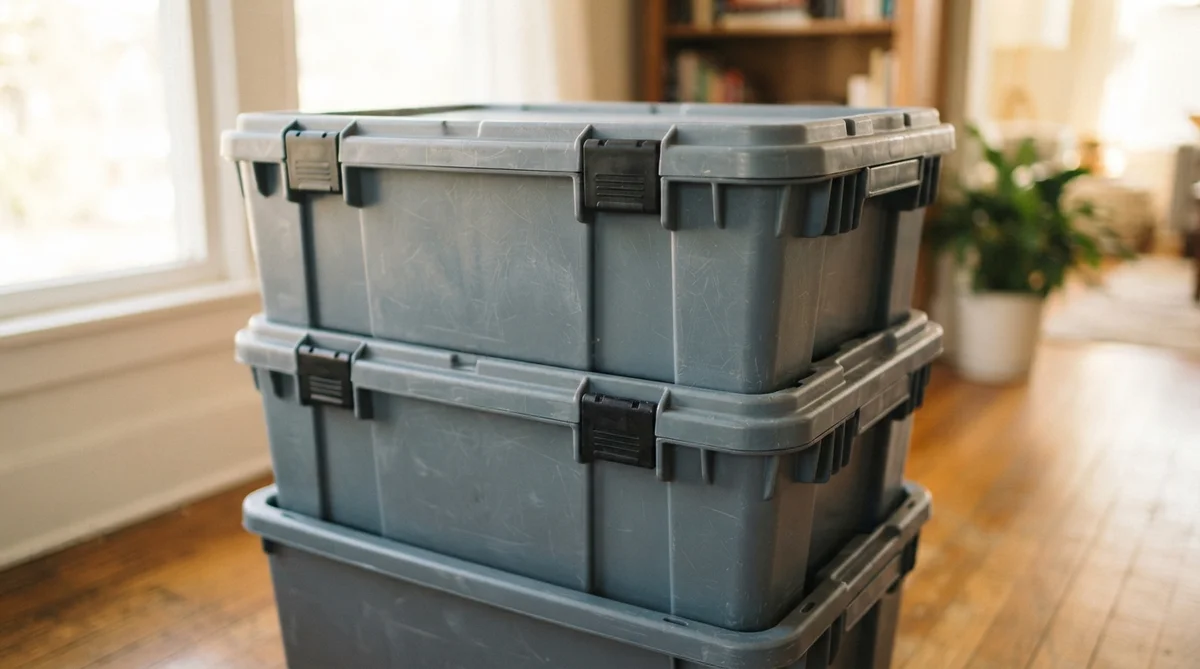
Opting for a reusable moving boxes hire service replaces flimsy single-use cardboard with durable, stackable plastic bins delivered straight to your doorstep. If rental services are unavailable in your area, sourcing sturdy used boxes from local businesses provides a reliable zero-cost alternative.
- Select rental services: Book hard plastic totes from rental companies for a standard two-week rental window.
- Source free used boxes: Ask local grocery stores, bookstores, or neighborhood groups for clean cardboard containers.
- Compare structural strength: Plastic totes stack up to four high without crushing, whereas aged cardboard can collapse under heavy weight.
Choose Plastic-Free and Biodegradable Packing Supplies
Swapping plastic tape and foam peanuts for paper-based materials ensures every supply can be composted or recycled after unpacking. Integrating zero waste packing materials keeps your packing station clean and fully recyclable.
- Use water-activated paper tape: Secure boxes with gummed kraft paper tape instead of synthetic plastic packing tape.
- Opt for honeycomb paper wrap: Protect fragile items using expandable paper wrap that cushions as effectively as plastic bubble wrap.
- Choose cornstarch packing peanuts: Cushion box interiors with plant-based peanuts that dissolve in water within 30 seconds.
How Do You Manage Sustainable Moving Day Logistics?
Hire an Environmentally Conscious Moving Company
Green moving service providers reduce carbon emissions by using alternative fuels, optimized routing software, and eco-friendly packing protocols. Asking specific questions about fleet maintenance and material disposal helps verify a mover’s environmental practices.
- Verify fleet efficiency: Select movers operating vehicles powered by biodiesel, hybrid systems, or electric drives.
- Check zero-waste practices: Confirm that the crew uses moving blankets and reusable straps rather than plastic stretch wrap.
- Look for community partnerships: Choose firms that partner with local charities to rehome unwanted items left behind during moves.
Consolidate Trips to Limit Vehicle Emissions
Minimizing driving distance and trip counts significantly lowers fuel consumption and greenhouse gas emissions during local relocations. Careful spatial planning ensures you fit your belongings into the fewest trips possible.
- Map out direct routes: Plan transport during off-peak traffic hours to reduce engine idling and wasted fuel.
- Maximize cargo space: Pack the moving vehicle completely from floor to ceiling to eliminate extra runs between properties.
- Combine errands: Complete key drop-offs, utility checks, and supply runs in a single planned circuit.
Post-Move: How to Unpack and Set Up a Sustainable Home?
Recycle, Reuse, or Pass On Moving Supplies
Responsible post-move management keeps boxes, paper, and crates circulating in the community rather than crowding waste streams. Flattening and storing clean boxes preserves them for future use.
- Pass boxes to neighbors: Offer intact cardboard boxes on local community boards for the next family preparing to relocate.
- Compost unprinted paper: Tear up unprinted newsprint or brown wrapping paper to add to home compost bins as carbon material.
- Return rental equipment: Stack and sanitize rented plastic crates for pickup at your scheduled date.
Lower Your Energy Footprint with Green Power and Community Solar
Setting up clean utility services upon arrival lowers your carbon footprint from your first day in your new home. Many energy markets allow consumers to choose renewable suppliers directly through their utility bills.
- Enroll in green tariffs: Request 100% renewable energy supply options through your local electric utility provider.
- Join community solar programs: Subscribe to local solar arrays to offset home electricity usage without installing rooftop panels.
- Install smart controls: Set up programmable thermostats and LED lighting before unpacking complete rooms to lower base power loads.
Cost Comparison: Traditional vs. Eco-Friendly Moves
Adopting sustainable moving practices delivers clear financial savings alongside environmental benefits. The table below outlines average costs for a typical two-bedroom relocation.
| Category | Traditional Move | Eco-Friendly Move | Estimated Savings |
|---|---|---|---|
| Boxes & Crates | Buying 30 new cardboard boxes ($75 – $120) | Reusable crate rental or free local boxes ($0 – $90) | $30 – $75 |
| Cushioning | Bubble wrap & foam rolls ($40 – $70) | Towels, linens, honeycomb paper ($0 – $20) | $40 – $50 |
| Sealing & Tape | 6 rolls plastic tape ($25 – $35) | Kraft paper tape & rubber bands ($10 – $18) | $12 – $17 |
| Junk Disposal | Landfill dump fees ($150 – $300) | Local swaps, donations, Buy Nothing ($0) | $150 – $300 |
Green Moving FAQs
What is considered a green move?
A green move minimizes environmental impact by reducing landfill waste, lowering transportation fuel usage, and utilizing sustainable packing materials. It prioritizes reusing existing containers, choosing renewable supplies, and rehoming unwanted goods locally.
How do you pack fragile items without bubble wrap?
Fragile items can be safely cushioned using thick fabrics already in your household or recyclable honeycomb kraft paper. These soft materials absorb shocks effectively while eliminating single-use plastic waste.
- Nest dishware in t-shirts: Place soft cotton shirts between stacked ceramic plates and glass bowls.
- Use socks for glassware: Slide wine glasses and delicate cups into thick athletic socks for cushioned protection.
- Wrap art in heavy blankets: Secure framed glass prints inside thick quilts or wool blankets bound with cotton twine.
Are reusable moving box rentals worth the cost?
Renting plastic moving crates is cost-effective because it eliminates tape purchases, saves hours of box assembly time, and provides superior water-resistant protection. Delivered plastic bins nest neatly when empty and are picked up directly by the rental provider once you finish unpacking.