
WHAT YOU NEED TO KNOW
Clearing an ant invasion requires stopping their scent trails and destroying the colony rather than just spraying the pests you see on your counter. Using targeted techniques is the most effective strategy for how to get rid of ants in the house without relying on harsh professional treatments.
- Worker ants represent only 10% of a colony, meaning targeting the nest is critical for long-term success.
- Natural baits like borax mixed with sugar typically eliminate an entire colony within seven to 14 days.
- A simple solution of 50% white vinegar and 50% water completely disrupts the pheromone trails ants use to navigate.
The right approach depends entirely on identifying the specific ant species you are dealing with, as some seek moisture while others target sugars.
How to Get Rid of Ants in the House by Identifying the Species
Identifying the specific ant species in your home allows you to choose the most effective bait and treatment method. Different ants require different food sources and nesting environments throughout the year. Knowing your target saves time and prevents you from using ineffective baits.
- Odorous house ants: Small, dark brown or black ants that emit a rotten coconut smell when crushed and crave sweet foods.
- Carpenter ants: Large, black or reddish-black ants that nest inside wood, often leaving behind piles of sawdust-like shavings.
- Pavement ants: Small, dark brown ants that typically nest under foundations, slabs, or sidewalks, and eat almost anything.
- Pharaoh ants: Tiny, light yellow or orange ants that nest indoors in wall voids and require specialized non-repellent baits.
What Are the Signs of an Ant Infestation?
Recognizing the early warning signs of an ant problem lets you intervene before a few scout ants turn into a massive colony. Regular monitoring prevents costly structural damage, especially from wood-boring species. Catching them early makes eradication much simpler.
- Active scout ants: A few lone ants wandering around your kitchen or bathroom searching for food and water sources.
- Visible pathways: Distinct, organized lines of ants traveling along baseboards, countertops, or walls.
- Frass piles: Small heaps of wood shavings, dead insect parts, and debris beneath wooden structures, which indicates carpenter ants.
- Rustling noises: Faint rustling sounds coming from inside your walls or wooden framing, especially during quiet night hours.
Natural and Safe Home Remedies to Get Rid of Ants
Using natural home remedies for ants helps keep your living spaces free of harsh chemical sprays. These options are particularly useful in households with curious pets or young children. They work by disrupting trails, dehydrating the insects, or poisoning the colony naturally.
How Does Vinegar Spray Help?
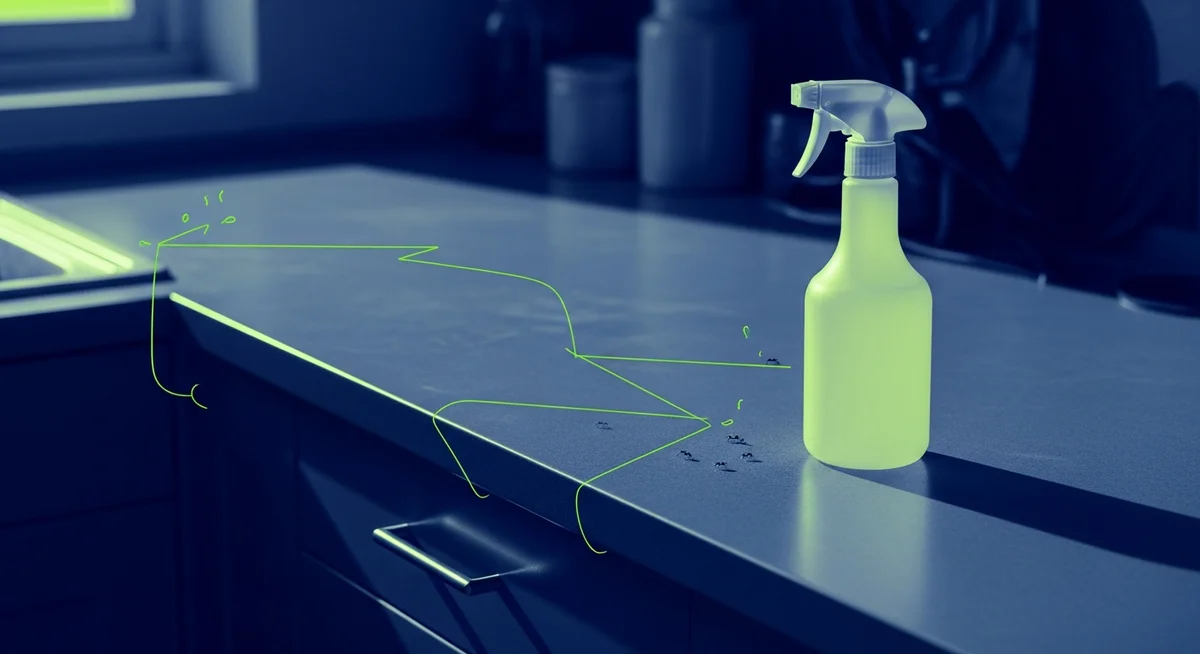
A simple vinegar spray works by wiping out the invisible chemical trails that ants use to communicate and navigate. The strong scent masks these pheromones, causing scout ants to lose their way and seek resources elsewhere. It is a highly accessible first step for any homeowner.
Mix equal parts of white vinegar and warm water in a spray bottle. Clean your kitchen counters, cabinets, and baseboards daily with this mixture. According to the National Pesticide Information Center, removing food sources and cleaning scent trails is the most effective first step in residential pest control.
Why Use Baking Soda and Sugar?
Baking soda acts as a safe, natural toxicant to ants when they ingest it, while powdered sugar serves as the bait to lure them. When ants consume this mixture, the baking soda reacts with the acids in their digestive systems to eliminate them. It is highly effective for sweet-seeking ants.
Combine equal parts of baking soda and confectioners’ sugar in a shallow lid. Place these bait stations near active ant pathways or under appliances. Avoid using granulated sugar, as ants can easily separate the sugar crystals from the baking soda.
Do Essential Oils Work?
Yes, essential oils like peppermint, tea tree, and citrus contain natural compounds that act as highly effective deterrents for ants. These oils disrupt the sensory receptors of ants, making it difficult for them to locate food. They also leave a pleasant scent behind.
Mix 15 drops of peppermint oil and 15 drops of tea tree oil with 2 cups of water in a spray bottle. Shake well and spray around entry points, window sills, and doorways. Research from the University of California Agriculture and Natural Resources program confirms that plant-based essential oils provide a reliable, temporary barrier against invading pests.
What Is Food-Grade Diatomaceous Earth?
Food-grade diatomaceous earth is a natural powder made from fossilized algae that physically destroys an ant’s protective exoskeleton on contact. This causes the insect to dehydrate and die within 24 to 48 hours. It remains effective as long as it stays dry.
Sprinkle a thin layer of the dry powder along baseboards, behind appliances, and in wall crevices. Make sure to purchase food-grade diatomaceous earth rather than the pool-filtration grade, which is hazardous to inhale. Wear a simple dust mask during application to avoid temporary lung irritation.
How Do You Use Borax and Sugar Bait?
Borax bait works by allowing worker ants to carry a slow-acting poison back to the nest to feed and destroy the entire colony. This method is highly effective because it targets the queen rather than just the visible workers. It requires some patience but offers permanent results.
Dissolve one tablespoon of borax and four tablespoons of sugar into one cup of warm water. Soak cotton balls in the liquid and place them in shallow dishes near known ant trails. Check the stations daily and replace the cotton balls as they dry out to keep the bait appealing.
Can Lemon Juice Deter Ants?
Lemon juice deters ants because its high citric acid content destroys their pheromone trails and makes your kitchen smell uninviting to pests. It acts as a natural, non-toxic barrier that keeps ants from crossing specific thresholds. It is ideal for spot treatments.
Squeeze fresh lemon juice directly onto windowsills, doorways, and threshold gaps. You can also leave lemon peels near entry points to act as a localized deterrent. Reapply every three days or after heavy cleaning to maintain its effectiveness.
How Do You Prevent Ant Infestations?
Learning how to keep ants out of kitchen spaces requires a combination of strict sanitation, moisture control, and physical exclusion. By eliminating the resources that attract them, you ensure that ants stay outdoors where they belong. Consistent habits make a significant difference.
- Store food in airtight containers: Keep sugars, syrups, pet food, and pantry staples sealed in heavy-duty plastic or glass jars.
- Wipe down surfaces daily: Clean crumbs, grease, and spilled liquids off countertops, dining tables, and stoves immediately after cooking.
- Fix plumbing leaks: Repair dripping pipes, leaky faucets, and clogged drains, as ants are constantly searching for reliable water sources.
- Seal structural entry points: Apply silicone caulk to cracks around windows, exterior doors, utility lines, and foundation gaps to block physical access.