
WHAT YOU NEED TO KNOW
Learning how to stock a basic pantry ensures you can always cook a healthy, delicious meal without making daily, stressful trips to the grocery store.
- A starter checklist of 30 key ingredients can cover more than 90% of your daily cooking needs.
- According to Consumer Reports, buying store-brand kitchen basics can save you up to 30% on your total bill without sacrificing food quality.
- Storing whole grains and dry beans in airtight containers extends their culinary shelf life to two to five years.
Your personal eating habits should guide your purchases, so only stock up on ingredients you genuinely enjoy using.
How to Stock a Basic Pantry with Shelf-Stable Staples
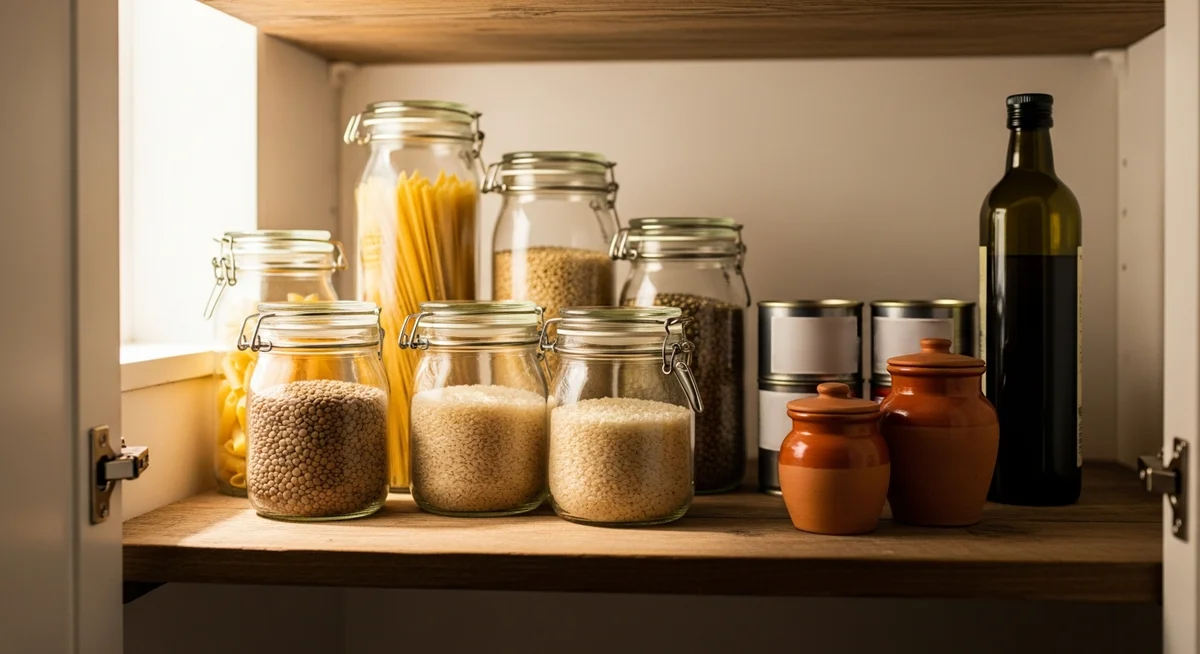
Stocking your pantry involves focusing on dried items, canned items, and seasonings that have a long shelf life. These dry goods form the foundational core of almost every home-cooked meal you prepare. Building a reliable kitchen setup is all about making everyday know-how simple and manageable.
Which Rice, Grains, and Pasta Keep Best?
Dry grains and pasta are the ultimate shelf-stable base because they store well for years and cook quickly. Keep a rotating stock of long-grain white rice, whole wheat pasta, and rolled oats to build satisfying meals. These items absorb sauces beautifully and keep you full longer.
- Long-grain white rice or jasmine rice for easy, versatile side dishes.
- Dried pasta shapes like penne, spaghetti, or rigatoni to pair with simple tomato sauces.
- Old-fashioned rolled oats for hearty breakfasts, baking, or homemade granola.
- Quinoa or couscous for quick-cooking grains that serve as nutrient-dense salad bases.
What Canned and Jarred Goods Are Essential?
Canned and jarred goods are essential because they provide instant moisture, flavor, and protein with zero advance prep work. Focus on stocking diced tomatoes, various beans, and canned fish to quickly assemble quick dinners. They require very little cupboard space and remain fresh for years.
- Canned beans like black beans, chickpeas, and kidney beans for quick plant-based proteins.
- Canned diced tomatoes and tomato paste to create pasta sauces, chili, or rich stews.
- Canned tuna or salmon to make quick lunch salads or easy fish cakes.
- Low-sodium chicken broth or vegetable broth to use as a flavorful cooking liquid for grains and soups.
Which Baking Staples and Sweeteners Do You Need?
A basic baking collection allows you to thicken sauces, make quick breads, and add sweetness to your morning meals. Keep all-purpose flour, baking soda, and pure maple syrup on hand for everyday kitchen versatility. You do not need a bakery-level inventory to get started.
- All-purpose flour for baking, breading proteins, or thickening gravies.
- Baking soda and baking powder to help your quick breads and pancakes rise.
- Pure maple syrup or honey to act as natural sweeteners for oatmeal and dressings.
- Unsweetened cocoa powder and dark chocolate chips for quick baking needs.
What Oils, Vinegars, and Sauces Are Crucial?
You need reliable cooking fats, acidic vinegars, and savory sauces to balance flavors and keep food from sticking to your pans. Stock extra virgin olive oil, neutral cooking oil, balsamic vinegar, and soy sauce to build easy vinaigrettes and marinades. These liquid staples keep your meals from tasting bland.
- Extra virgin olive oil for low-heat cooking and making raw salad dressings.
- Neutral cooking oil like avocado or canola oil for high-heat searing and roasting.
- Balsamic vinegar or apple cider vinegar to bring bright, tangy acidity to your savory dishes.
- Soy sauce or tamari to add instant umami, saltiness, and depth to stir-fries and marinades.
Which Dried Herbs and Spices Pack the Most Punch?
A concentrated spice cabinet transforms bland ingredients into aromatic meals without adding extra sodium or fat. Focus on highly versatile herbs and spices like sea salt, garlic powder, smoked paprika, and dried oregano. These dried options deliver intense flavor that lasts for months.
- Fine sea salt and whole black peppercorns in a grinder for fundamental seasoning.
- Garlic powder and onion powder to add quick savory depth without chopping fresh alliums.
- Smoked paprika for a warm, smoky color and flavor in rubs, stews, and roasted potatoes.
- Dried oregano and ground cumin to bring earthy, herbal notes to Mexican, Italian, and Mediterranean dishes.
What Snacks, Nuts, and Seeds Should You Buy?
Nuts, seeds, and dried fruits are great to have on hand because they serve as quick snacks and add texture to simple recipes. Keep peanut butter, raw almonds, and dried cranberries ready in your cupboard. They provide healthy fats and satisfying crunch whenever you need them.
- Peanut butter or almond butter for a quick protein boost on toast or apples.
- Raw almonds or walnuts to eat as an energy-dense, portable snack.
- Dried cranberries or raisins to sweeten oatmeal, salads, and grain bowls.
- Chia seeds or flaxseeds to stir into morning yogurts and smoothies for fiber.
Which Refrigerator Staples Should You Keep on Hand?
Your refrigerator should hold fresh dairy, eggs, and long-lasting produce that breathe life into your dry goods. These items bridge the gap between shelf-stable ingredients and fresh, vibrant plates. Keeping these basic cold items on hand ensures you can always round out a pantry-based meal.
What Dairy and Eggs Are Most Versatile?
Fresh eggs and basic dairy products are highly versatile because they bind ingredients, add richness, and provide quick sources of high-quality protein. Keep large eggs, unsalted butter, and plain Greek yogurt on hand to simplify your meal prep. They transition easily between breakfast, lunch, and dinner recipes.
- Large eggs for baking, quick scrambles, or topping a savory grain bowl.
- Unsalted butter for baking, pan-searing proteins, and sauteing vegetables.
- Plain Greek yogurt to use as a healthy snack, a breakfast base, or a sour cream alternative.
- Cheddar cheese or parmesan to melt into casseroles or grate over warm pasta.
Which Produce Lasts the Longest?
Sturdy produce like root vegetables, brassicas, and alliums can remain fresh in your refrigerator or cool pantry for weeks without losing their flavor. Stock yellow onions, fresh garlic, carrots, and potatoes to ensure you always have fresh elements on hand. This practice drastically cuts down on weekly food waste.
- Yellow onions and fresh garlic bulbs to start almost every savory meal.
- Carrots and celery stalks to build rich soup bases and aromatic sauces.
- Russet potatoes or sweet potatoes for filling, nutrient-dense side dishes.
- Broccoli or green cabbage for sturdy greens that do not spoil quickly in the crisper drawer.
What Essential Condiments Boost Flavor Fast?
A few key condiments add complex, concentrated flavor to simple dishes with almost zero effort. Keep Dijon mustard, mayonnaise, Sriracha, and fruit preserves in your refrigerator door for instant flavor upgrades. They are excellent for making quick pan sauces, sandwich spreads, and dips.
- Dijon mustard to emulsify salad dressings and add a tangy bite to marinades.
- Mayonnaise for creamy sandwiches, potato salads, or as a base for custom aiolis.
- Sriracha or your favorite hot sauce to customize the heat level of any meal.
- Fruit preserves or jam to pair with nut butters or sweeten savory glazes.
What Are the Best Freezer Essentials for Quick Meals?
Your freezer acts as a preservation vault for delicate proteins, bread, and fruits that would otherwise spoil within days. Keep boneless chicken breasts, ground beef, frozen peas, and frozen berries on hand to prevent emergency takeout runs. Frozen options are often frozen at peak ripeness, preserving both nutrients and flavor.
- Boneless, skinless chicken breasts or ground beef for easy, protein-packed dinners.
- Frozen peas and chopped spinach to toss into hot pasta dishes and soups for quick color and nutrients.
- Frozen mixed berries or sliced peaches for morning smoothies and warm oatmeal toppings.
- Sliced sandwich bread or a crusty baguette to keep bread fresh without risking mold.
How Do You Build Your Pantry on a Budget?
You can build a reliable pantry on a budget by purchasing a few versatile basics each week rather than buying everything all at once. This gradual method keeps your weekly grocery bill low and helps you avoid food waste. Over time, these small additions build a robust culinary foundation.
- Purchase store-brand items for basic dry goods like flour, sugar, salt, and canned beans to save money instantly.
- Buy grains, oats, and nuts from the bulk bins where you pay strictly for the weight without packaging costs.
- Choose dried beans over canned beans when you have extra time, as dried beans offer a lower price per serving.
- Limit your initial spice purchases to three key seasonings that match your favorite type of cuisine, then expand as needed.
How Do You Store and Organize Your Pantry Essentials?
The best way to organize and store your pantry essentials is to keep them in airtight containers located in a cool, dark, and dry cupboard. This simple setup keeps pests away and extends the shelf life of your food significantly. Good organization also helps you see exactly what you have, preventing accidental double-purchases.
- Transfer grains, flours, and sugar into clear glass or BPA-free plastic containers with tight silicone seals.
- Apply the first-in, first-out (FIFO) organizational method by placing newer groceries behind older ones.
- Keep potatoes and onions stored in separate, well-ventilated baskets because onions emit gases that cause potatoes to sprout faster.
- According to the United States Department of Agriculture (USDA) food safety guidelines, maintain dry storage temperatures between 50 and 70 degrees Fahrenheit to maximize the life of your dry goods.