
WHAT YOU NEED TO KNOW
Learning how to cook popcorn in a skillet delivers a lighter, crunchier snack than microwave bags while avoiding artificial additives and scorched kernels.
- Preparation time: Under 10 minutes total from heat to bowl.
- Ideal ratio: Use 1 tablespoon of oil for every 1/4 cup of unpopped popcorn kernels.
- Nutritional value: According to the USDA, a 3-cup serving of plain popped corn yields about 3.5 grams of dietary fiber for around 110 calories.
- Equipment choice: Heavy cast iron or deep stainless steel skillets prevent burning by ensuring balanced heat distribution across the pan base.
The single key to success is venting steam during popping so moisture does not collect inside the skillet and make kernels soggy.
Ingredients and Equipment Needed
Making delicious popcorn on your stove requires simple pantry staples and heavy cookware. Using the correct pan ensures heat spreads evenly across every kernel without creating scorching hot spots.
You need a deep 10-inch or 12-inch skillet with a lid, popcorn kernels, high-heat oil, and fine salt. High-sided skillets keep kernels contained as they expand rapidly.
- Deep skillet or frying pan: A heavy cast iron skillet or deep stainless steel saute pan works best.
- Lid or splatter screen: A vented lid or a standard lid held slightly askew allows steam to escape while trapping flying kernels.
- Popcorn kernels: Yellow kernels produce sturdy, movie-theater-style popcorn, while white kernels yield smaller, tender bites.
- Cooking oil: Choose oils with smoke points above 350°F to prevent bitter burnt flavors.
- Fine salt: Popcorn salt or finely ground sea salt sticks to oiled kernels far better than coarse table salt.
Best Oils for Skillet Popcorn
Selecting the right oil determines both flavor and high-heat stability during the popping process. Oils with low smoke points burn quickly in a hot skillet and ruin the batch.
Testing from Consumer Reports indicates that neutral oils with smoke points exceeding 400°F handle skillet heat without breaking down into acrid compounds.
- Coconut oil: Virgin or refined coconut oil offers the classic aroma and rich flavor associated with movie theater concessions.
- Extra-virgin olive oil: Works well over medium heat, adding a mild fruity note and healthy monounsaturated fats.
- Avocado oil: Features a high smoke point of 520°F, making it extremely forgiving against pan hot spots.
- Canola or vegetable oil: Neutral and affordable choices that let the natural flavor of corn shine through without added aromas.
How to Cook Popcorn in a Skillet: Step-by-Step
Mastering how to cook popcorn in a skillet relies on temperature control and timing. Following a proven process guarantees that nearly every kernel pops without burning the bottom layer.
Step 1: Heat the Oil with Test Kernels
Place your heavy skillet over medium heat on the burner. Pour in 2 tablespoons of oil and drop in exactly 3 test kernels of popcorn before covering with the lid.
Wait until all three test kernels pop, which usually takes between 2 and 4 minutes. This simple step verifies that the oil and pan have reached the target popping temperature of approximately 350°F to 380°F.
Step 2: Add Kernels and Cover
Once the test kernels pop, remove the pan from heat briefly. Add the remaining 1/2 cup of kernels to maintain the optimal stovetop popcorn kernels ratio of oil to corn.
Swirl the pan for 30 seconds off the flame so the cool kernels get evenly coated in warm oil and reach a uniform temperature. Return the skillet to medium heat and cover it, leaving the lid cracked open about a quarter-inch to let steam vent out.
Step 3: Shake the Skillet While Popping
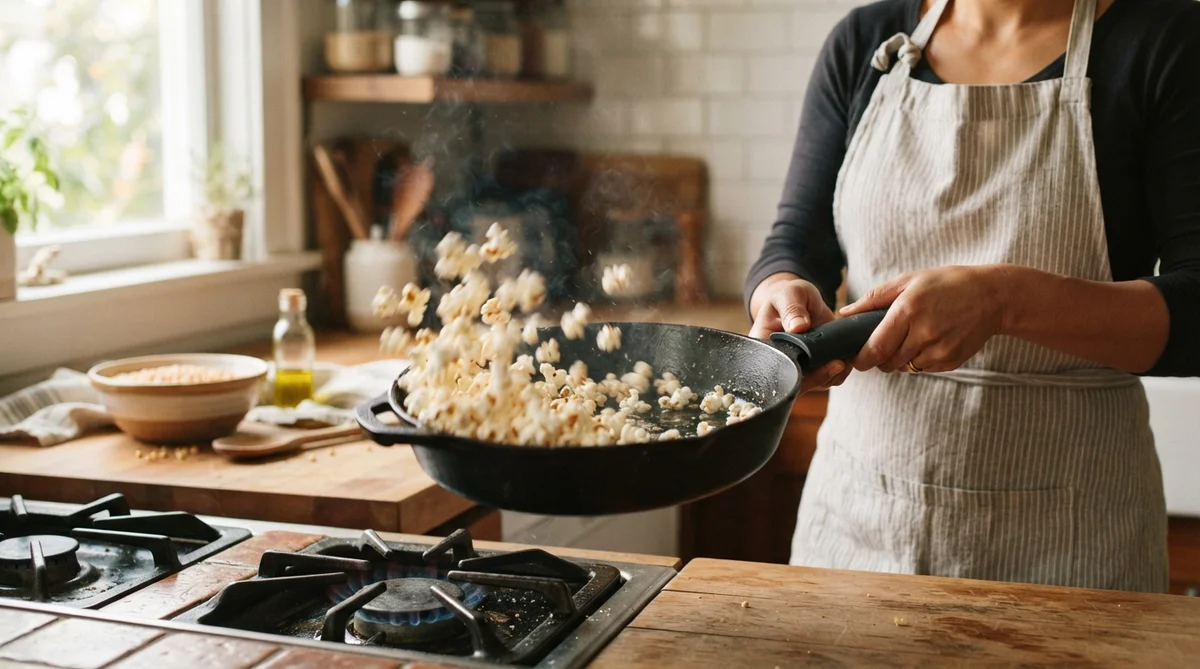
As the kernels start popping rapidly, hold the pan handle firmly with an oven mitt. Gently slide the skillet back and forth across the burner every 5 to 10 seconds.
Shaking pushes unpopped kernels down to the hot surface while lifting fully popped corn up toward the lid. Keep the lid slightly ajar during this phase to maintain maximum crispness.
Step 4: Remove from Heat and Season Immediately
Listen closely as popping accelerates and then gradually slows down. When the gap between pops stretches to 2 full seconds, immediately remove the skillet from heat and take off the lid completely.
Pour the hot popcorn into a large wide bowl right away to stop residual heat from dulling the crunch. Sprinkle fine salt or seasonings immediately so the warm oil catches the flavor before it settles at the bottom.
Recommended Popcorn Seasonings
Elevating skillet popcorn beyond plain salt takes minimal effort and standard kitchen ingredients. Applying seasonings while the batch is steaming hot guarantees maximum adhesion.
- Classic butter and salt: Melt 2 tablespoons of unsalted butter and drizzle it slowly over the bowl while tossing gently.
- Nutritional yeast and garlic: Sprinkle 2 tablespoons of nutritional yeast with a pinch of garlic powder for a savory, dairy-free cheesy taste.
- Chili lime twist: Mix 1/2 teaspoon of chili powder with fresh grated lime zest for a zesty, spicy kick.
- Cinnamon sugar: Toss hot popcorn with 1 tablespoon of fine sugar and 1/2 teaspoon of ground cinnamon for a sweet treat.
- Parmesan herb: Grate fresh parmesan cheese finely over warm kernels along with dried oregano or thyme.
Tips to Avoid Burning and Keep Popcorn Crispy
Preventing tough or burnt kernels requires managing steam and temperature throughout the cooking process. A few quick operational adjustments deliver airy, crispy snacks every time.
If you are exploring how to pop corn in frying pan setups without custom popcorn lids, use a metal splatter screen or prop standard lids open with a wooden spoon handle. Trapped steam condenses on the underside of the lid and drips back onto kernels, making them chewy instead of crisp.
- Control heat settings: Stick to steady medium heat rather than high heat, which scorches oil before kernels can expand.
- Vent steam constantly: Leave lid gaps open so water vapor escapes instantly as starch inside kernels expands.
- Use fine seasonings: Grind sea salt in a spice grinder so tiny particles cling to individual popcorn pieces without clumping.
- Never overload the pan: Keep kernels in a single layer across the pan bottom so heat transfers uniformly.
How to Store Homemade Popcorn
Fresh skillet popcorn tastes best immediately after cooking, but proper storage retains crispness for future snacking. Moisture is the primary enemy of leftover popcorn.
Allow the popcorn to cool completely to room temperature before packing it into containers. Placing warm popcorn into sealed jars creates steam condensation that quickly ruins the texture.
Store fully cooled popcorn in an airtight glass jar or sealable food storage bag at room temperature for up to 3 to 4 days. Do not refrigerate cooked popcorn, as fridge humidity causes rapid staling.