
WHAT YOU NEED TO KNOW
Organizing a small space is not about finding more square footage, but rather about optimizing the layout you already have by utilizing vertical gaps, zoning your cabinets, and decluttering relentlessly.
- According to a space utilization study by Consumer Reports, the average kitchen contains up to 30% of items that are never or rarely used, meaning learning how to organize a small kitchen starts with a thorough purge.
- Utilizing vertical shelf risers and stackable bins can reclaim up to 40% of unused cabinet volume.
- Setting up functional work zones saves the average home cook up to 15 minutes of search and prep time per meal.
The ultimate success of your layout depends on matching your storage solutions directly to your specific daily cooking habits.
How to organize a small kitchen with simple planning?
To organize a small kitchen efficiently, you must start with a systematic assessment of what you own and how you use it. This prevents you from buying organizers that do not fit your workflow. A logical plan keeps your most-used items within arm's reach and tucks away seasonal pieces.
Purge items you rarely use
Begin by emptying your cabinets entirely to audit your inventory. Discard expired food, donate duplicate gadgets, and remove appliances you have not used in the past six months. For safety, the USDA recommends inspecting non-perishable goods for dented or bulging cans before deciding what to keep.
Group like items by frequency of use
Sort your remaining kitchen gear into three distinct categories: daily essentials, weekly items, and occasional pieces. Your daily coffee mugs and plates belong on easy-to-reach lower shelves. Holiday platters and heavy roasting pans should go to the highest cabinets or storage boxes.
Map out zones based on daily tasks
Divide your room into functional zones such as prep, cooking, cleaning, and storage. Store your knives and cutting boards near the prep counter, and keep pots and oven mitts right next to the stove. This minimizes steps across your kitchen floor during a busy meal prep.
How can you maximize cabinet storage?
Maximizing your cabinet space requires shifting your perspective from horizontal storage to vertical volume. Most cabinets feature vast pockets of empty air that can easily be utilized with the right inserts. With simple adjustments, you can fit double the amount of cookware into a standard cabinet.
Double your space with shelf risers and tiered inserts
Wire or plastic shelf risers instantly turn one tall cabinet shelf into two functional tiers. Use them to stack bowls on the bottom and smaller salad plates on top. This prevents the frustration of unstacking heavy ceramic piles just to reach a single dish.
Install turntables or Lazy Susans in deep corners
Deep corner cabinets often become dark holes where spices and cans go to be forgotten. A rotating turntable brings items from the back directly to the front with a single spin. This is especially useful for oils, vinegars, and baking extracts that tend to tip over.
Store baking sheets and platters vertically
Stacking baking sheets horizontally forces you to lift the entire pile every time you cook. Use vertical slotted organizers to store cookie sheets, cutting boards, and muffin tins upright like books on a shelf. This makes retrieving a single pan effortless and silent.
Utilize the backs of cabinet doors
The inside of a cabinet door is prime, underutilized real estate. Mount slim adhesive bins or over-the-door organizers to hold pot lids, plastic wrap, or aluminum foil. You can also hang measuring spoons on small hooks inside the baking cabinet door.
Adjust cabinet shelf heights to eliminate wasted space
Many modern cabinets feature adjustable shelves resting on small plastic pegs. Take a few minutes to move these pegs up or down to match the exact height of your tallest glasses or food boxes. Eliminating a three-inch gap of dead space can free up an entire extra shelf elsewhere.
Decant dry goods into stackable, clear containers
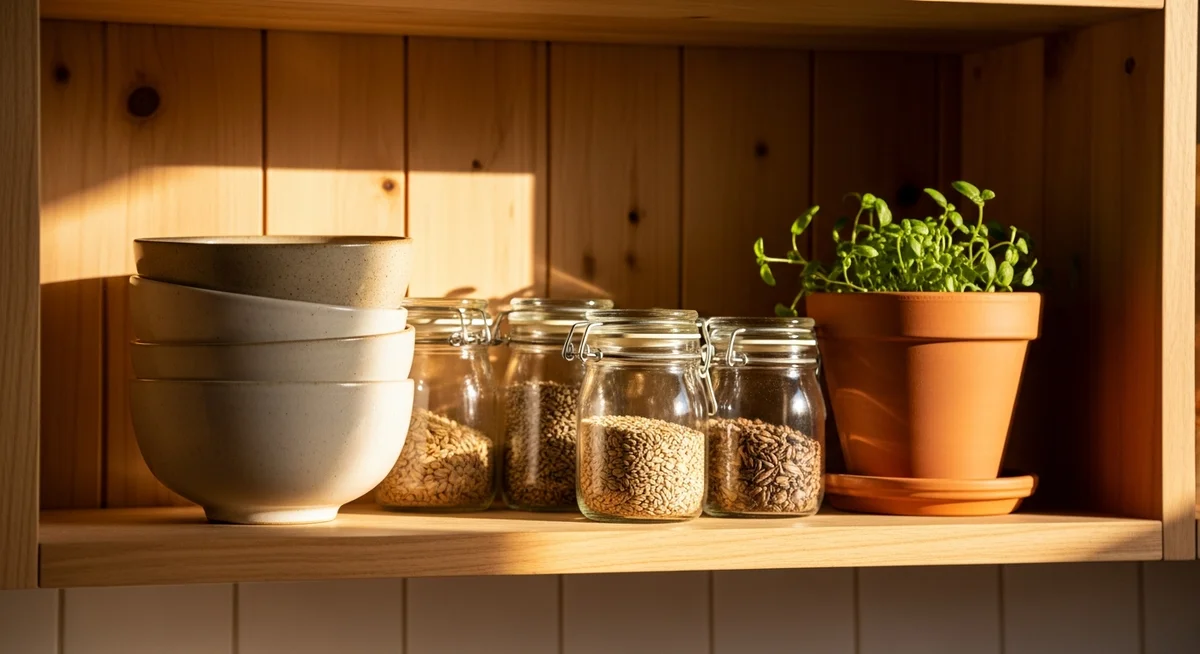
Bulky cardboard grocery packaging is highly inefficient and creates visual clutter. Transfer flour, sugar, cereal, and pasta into airtight, stackable acrylic containers. This allows you to see exactly when supplies are running low while keeping pantry pests out.
How do you utilize vertical and wall space?
When your cabinets are full, look to your walls to expand your storage capacity. Wall space is highly durable and can support significant weight when mounted into wall studs. Utilizing these surfaces keeps your counters completely clear for actual food preparation.
Mount a magnetic knife strip on the wall or cabinet side
Traditional wooden knife blocks take up valuable counter space and can harbor moisture. A heavy-duty magnetic knife strip mounted above your prep station keeps your kitchen knives safe and dry. It also makes grabbing the correct blade incredibly fast while you chop.
Hang pots and pans on a wall rack
Pots and pans are among the bulkiest items in any kitchen and eat up cabinet space. Install a wall-mounted wooden or metal pot rack with sturdy hooks to hang your skillets and saucepans. This mimics professional restaurant kitchens and makes cooking feel incredibly efficient.
Install open shelves or corner shelving
If you have a blank wall or an empty corner, install a couple of floating shelves. Use these shelves to display your most handsome everyday dishes or frequently used spices. This keeps them within reach while adding a touch of personality to your kitchen.
Use self-adhesive hooks for mugs and utensils
Small plastic or metal adhesive hooks can turn any flat surface into a hanging station. Stick them to the underside of shelves to hang coffee mugs by their handles. You can also place them on the side of a cabinet to hold oven mitts, aprons, or microplanes.
Mount a magnetic paper towel and spice rack on the fridge
If your refrigerator has an exposed side, use heavy magnets to secure multi-tiered organizer racks. These units can easily hold your paper towel roll and up to 12 spice jars without drilling a single hole. It is an excellent renter-friendly solution for tight floor plans.
How do you optimize drawers and countertops?
Keeping your flat surfaces clean is key to making a small kitchen feel calm and usable. Drawers must be strictly organized to prevent them from becoming chaotic junk drawers. Streamlining these areas ensures that every item has a dedicated home.
Keep only absolute essentials on the countertop
The only items that belong on your counter are things you use every single day, such as your coffee maker. Stashing appliances like blenders, food processors, and toasters in cabinets keeps your workspace open. Clean, open counters instantly make a tiny room feel larger.
Use customizable drawer dividers to prevent clutter
Deep drawers easily become a tangled mess of spatulas, whisks, and tongs. Insert adjustable bamboo or plastic drawer dividers to create neat rows for different types of tools. Keep baking tools in one row and cooking utensils in another.
Use compact, tiered utensil organizers
Standard flat silverware trays lay items side by side, which requires a wide drawer. Tiered, overlapping utensil organizers stack your forks, spoons, and knives at an angle, which saves up to 50% of drawer width. This leaves room in the same drawer for larger serving spoons.
Expand prep space with an over-the-sink cutting board
If you lack counter space, buy a large wooden cutting board designed to rest securely over your sink basin. This temporarily extends your workspace, allowing you to prep vegetables directly over the drain. It is a highly practical solution for tiny apartments.
How can you exploit underused kitchen spaces?
Every kitchen has hidden pockets of space that usually go unnoticed. Identifying these gaps allows you to store items that do not fit into your standard cabinets. Exploiting these areas is the secret to successful small-space living.
Use the space above your cabinets for seasonal items
The gap between the top of your wall cabinets and the ceiling is perfect for long-term storage. Place rarely used items like holiday cookie cutters, turkey roasters, or extra paper towels in matching baskets up top. This keeps them dust-free and out of your daily way.
Organize the awkward under-sink area with pull-out bins
The plumbing under the sink makes organizing this cabinet difficult. Use two-tiered sliding metal organizers that fit around the pipes to maximize the vertical space. Keep dish soaps, sponges, and garbage bags corralled in clear plastic tubs.
Use tension rods under cabinets or in drawers
A simple tension rod can act as a clever vertical divider in tight spaces. Place one horizontally under your sink to hang spray bottles by their triggers, freeing up the cabinet floor. You can also use them vertically in drawers to keep plastic container lids standing upright.
Add a slim rolling cart in gaps between appliances
A narrow, three-tier rolling cart measuring just five inches wide can slip into the gap between your refrigerator and the wall. Use this mobile cart to hold canned goods, oils, or laundry supplies if your kitchen doubles as a utility room. To understand how we handle user data and maintain editorial independence, please review our Privacy Policy and read our Legal Notice.