
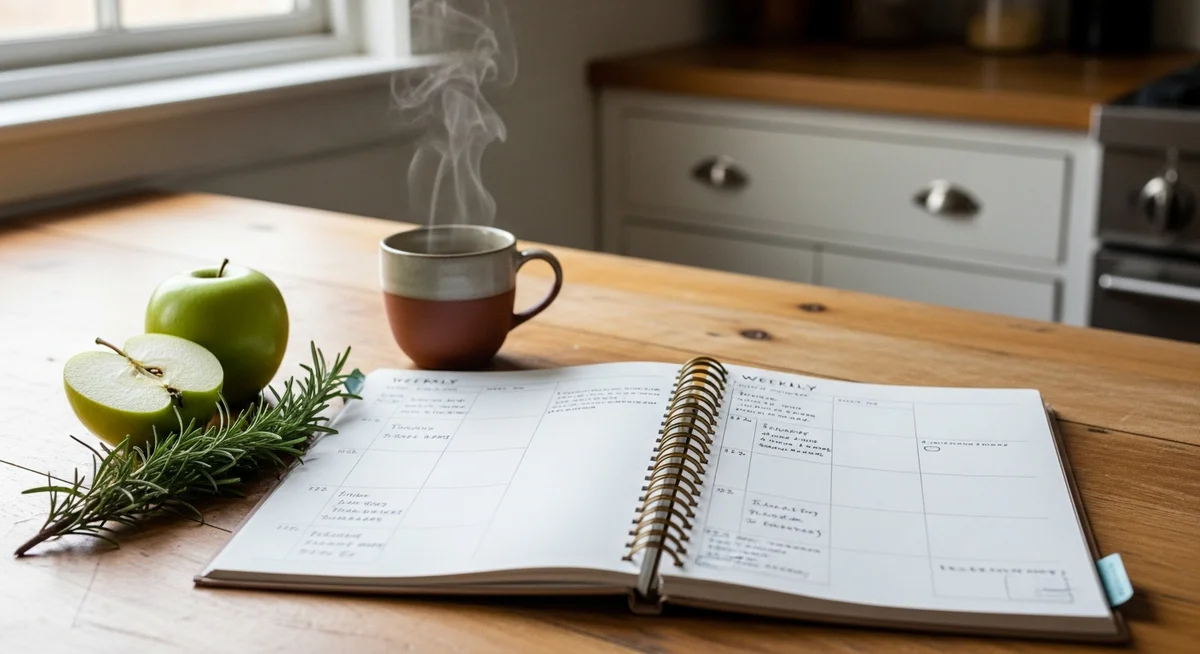
Meal planning for beginners does not require hours of complex prep: it is simply a systematic way to decide what you will eat before you shop, saving you time and money.
- Planning just three dinners per week can reduce household food waste by up to 20 percent, based on data from the United States Department of Agriculture (USDA).
- Preparing your own meals can save an average of 60 dollars per week compared to eating at restaurants or ordering takeout.
- A focused Sunday prep session of only 60 minutes can eliminate the daily evening stress of deciding what to cook.
The key to success is staying flexible and choosing simple recipes that you actually look forward to eating.
Why Meal Planning for Beginners is Worth the Effort
Meal planning is the practice of choosing your weekly meals ahead of time, buying the ingredients in one trip, and doing light prep work beforehand. It removes the daily anxiety of deciding what is for dinner and keeps you from wandering aimlessly through the grocery aisles. By organizing your meals in advance, you take control of your schedule and your food budget.
- Saves cold hard cash: By buying only what you need, you reduce expired food and avoid impulse purchases.
- Improves nutritional choices: The Mayo Clinic notes that planning ahead helps you control portion sizes and select balanced ingredients instead of relying on last-minute convenience foods.
- Saves precious hours: You cook in batches and clean up once, leaving your evenings free for relaxation.
How to Meal Plan in 5 Simple Steps
You can establish a solid meal planning routine by taking it one structured phase at a time. Breaking the process into five distinct steps ensures you never buy ingredients you do not use or cook meals you do not want to eat. This systematic approach takes the guesswork out of the kitchen.
Step 1: Check Your Calendar
Always start by looking at your schedule for the upcoming week so you can plan realistic meals. It is a mistake to plan a complex dinner on a night you have a late meeting or sports practice. Aligning your meals with your schedule prevents wasted food and takeout emergency orders.
- Identify busy nights: Assign quick, 15 minute meals or leftovers to these dates.
- Pinpoint social plans: Do not buy food for Thursday if you plan to eat out with friends.
- Schedule prep times: Block out 60 minutes on your calendar, perhaps on Sunday afternoon, to chop vegetables and cook grains.
Step 2: Take Inventory of Your Pantry and Freezer
Never start planning from scratch; instead, shop your kitchen first to reduce food waste. Check your cabinets and drawers before writing down a single recipe to see what you already have. This habit saves money and prevents you from buying duplicate items.
- Check the refrigerator: Look for vegetables, meats, or dairy products that must be used within the next three days.
- Scan the freezer: Identify frozen meats, vegetables, or batch-cooked grains that can form the base of a meal.
- Search the pantry: Stock up on dry goods like rice, pasta, canned beans, and spices that are already available.
Step 3: Choose Your Recipes Strategically
Choose meals that share common ingredients so you do not buy rare items that sit in your pantry forever. For example, if you buy a large bag of spinach, plan to use it in both a pasta dish and a side salad. This keeps your grocery bill low and your fridge uncluttered.
- Stick to familiar recipes: Cook two or three meals you already know by heart, and introduce only one new recipe per week.
- Plan for leftovers: Double your recipe portions for chili, soups, or casseroles so you have built-in lunches for the next day.
- Focus on seasonal produce: Buy fruits and vegetables that are in season because they taste better and cost less.
Step 4: Make an Organized Grocery List
Create a master list of all the ingredients needed for your chosen recipes, then cross off everything you already have in stock. Organizing the remaining items by grocery store department saves time. This prevents you from wandering back and forth across the store.
- Group by category: Write down your list sections like produce, meat, dairy, pantry, and frozen.
- Follow the store layout: Arrange your sections in the order you walk through the aisles, leaving the frozen department for the very end.
- Specify exact quantities: Write down the precise amounts you need, such as two cans of tomatoes or 500 grams of chicken breast.
Step 5: Shop and Prep Your Ingredients
Go shopping when you are not hungry to avoid impulse buys, then come home and immediately start your prep. Spending just 60 minutes washing, chopping, and portioning your food makes weekday cooking incredibly fast. You can roast vegetables, marinate meats, or portion out snacks so they are ready to grab. Having prepped ingredients waiting for you in the fridge means you are much less likely to order takeout when you are tired.
Meal Planning Methods: Which Level is Right for You?
Not everyone meal plans the exact same way, and finding your personal style is key to staying consistent. You can choose a method based on your schedule, cooking experience, and how much structure you prefer. Experimenting with different levels helps you find what works for your lifestyle.
- The Recipe Method: You select specific recipes for specific days of the week, which works best for households that love variety and structure.
- The Batch Cooking Method: You cook large portions of two or three versatile dishes, like roasted chicken or brown rice, and eat them throughout the week.
- The Ingredient Prep Method: You do not plan specific meals, but you wash, chop, and portion raw ingredients so assembly is fast and easy.
Smart Food Storage Tips for Beginners
Proper storage is critical to ensure your prepped food stays fresh and safe to eat throughout the week. The USDA recommends keeping your refrigerator temperature at or below 40 degrees Fahrenheit (which is four degrees Celsius) to slow bacterial growth. Using the correct containers also extends the life of your fresh produce.
- Invest in airtight containers: Use glass or BPA-free (Bisphenol A) plastic containers with locking lids to prevent leaks and keep air out.
- Label and date everything: Use masking tape and a marker to write down the date you prepped the food, so you know exactly when to use it.
- Store raw meat on the bottom shelf: Always place raw proteins on the lowest shelf to prevent any juices from dripping onto cooked foods or fresh produce.
- Keep prep to a five-day limit: Cooked meats and vegetables should be eaten within three to four days, or moved to the freezer for longer storage.
Practical Meal Planning Tips to Avoid Burnout
The biggest danger for beginners is trying to do too much too fast, which leads to exhaustion and abandoned plans. To keep your new routine sustainable, you must make room for flexibility and convenience. Before you start downloading planner templates or sharing your meal schedules on digital boards, you may want to look over our privacy policy to see how we handle online reader tools.
- Start small: Start by planning just two or three dinners for the week, rather than trying to plan every single meal and snack.
- Use pre-cut shortcuts: Do not hesitate to buy pre-washed greens, frozen chopped onions, or rotisserie chickens to save time.
- Schedule a theme night: Make Tuesdays taco night or Fridays pizza night to eliminate decision fatigue for at least one day.
- Give yourself grace: If plans change and you go out to eat, simply freeze your planned meal or adjust your schedule without guilt.
Your Weekly Meal Planning Checklist
To make this routine a habit, follow a simple checklist every week to stay organized and consistent. You can review our legal notice if you have any questions about how our tips and kitchen guidelines are shared on this platform. This routine will quickly become second nature.
- Friday: Check your calendar and select three to five recipes for the upcoming week.
- Saturday: Inventory your pantry, write your categorized grocery list, and buy your ingredients.
- Sunday: Spend 60 minutes prepping ingredients, chopping vegetables, and storing them in airtight containers.
- Monday through Friday: Enjoy fast, stress-free cooking and adjust your schedule as needed.